

Wonder Woman: The Sex-Positive Feminist Behind the Golden Lasso
Updated: Apr 26
by Liz Publika
DC Comics has published Wonder Woman storylines almost continuously since 1941, with the exception of a four-month hiatus in 1986.
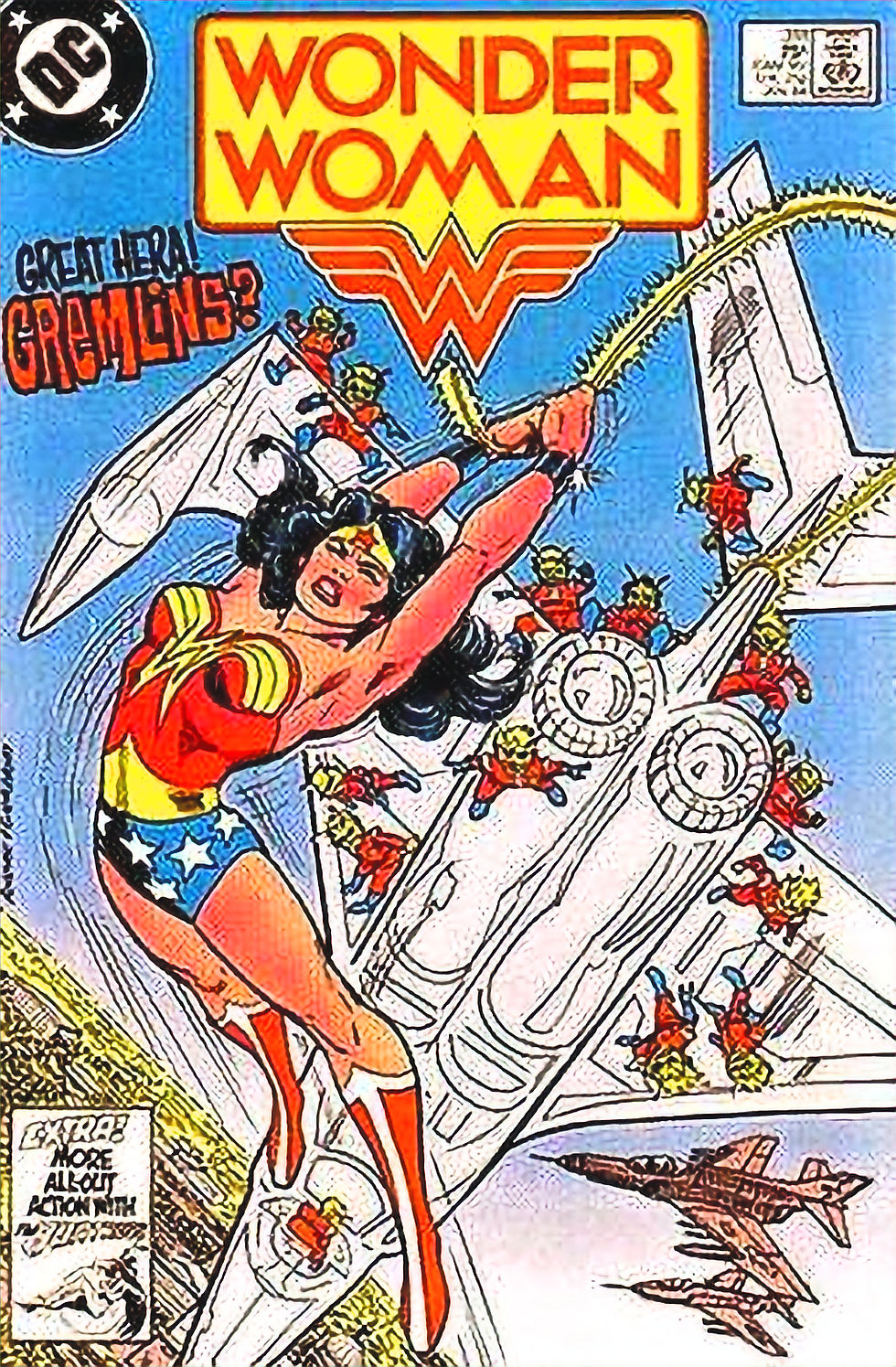
Wonder Woman was conceived by American psychologist and writer William Moulton Marston — whose pen name, Charles Moulton, combined his own middle name with that of publisher M.C. Gaines — and illustrated by cartoonist Harry George Peter, debuting in December 1941.
Marston was already known in scientific circles for co-inventing an early polygraph prototype with his wife, Elizabeth Holloway. His dissertation research on detecting deception through psychophysiology left a visible mark on the character: Wonder Woman's golden lasso, which compels truth, is widely understood as a direct reference to it.
His ties to the women's suffrage movement ran nearly as deep. Per NPR's coverage of Jill Lepore's The Secret History of Wonder Woman, Marston was drawn into suffragist debates as early as 1911 at Harvard, three decades before the character debuted. It was Holloway herself who pushed the concept in its defining direction — when Marston pitched his superhero idea to Gaines, her response was straightforward: "Fine — but make her a woman."
The character was largely based on Olive Byrne — the domestic partner of Marston and Holloway — as well as on Holloway and other women in Marston's life. As Britannica notes, Byrne was the niece of family-planning pioneer Margaret Sanger; her mother, Ethel Byrne, co-founded the first birth-control clinic in the United States alongside Sanger.

Wonder Woman first appeared in All Star Comics #8 (1941), published by All-American Publications, one of three companies that merged with National Periodical Publications to form DC Comics. Her first cover appearance was Sensation Comics #1, a DC series that ran 109 issues from 1942 to 1952 with Wonder Woman as its lead.
She joined the Justice Society in 1941 — though despite being among the team's most powerful members, she was assigned the role of secretary, a pointed reflection of the era's gender norms — and the Justice League in 1960. In the original storylines, her full title is Diana, Princess of Themyscira, Daughter of Hippolyta, known in civilian life as Diana Prince.
Sculpted from clay by her mother, Queen of the Amazons, she was brought to life by Aphrodite and given divine abilities by the gods, which she used to fight the Axis powers during WWII and various supervillains. She was frequently depicted rescuing herself from bondage — imagery Marston claimed referenced suffragist struggle. Critics, most notably Frederic Wertham, were unconvinced; Britannica characterizes that defense as strained, given how thoroughly the concept of "loving submission" ran through both Marston's comics and his personal philosophy.
Her character has since been substantially revised. Her current origin replaces Aphrodite with Zeus as the figure who gave her life, and her powers are now attributed to Ares, casting her as the new God of War and him as one of her primary antagonists. Her physical depiction has also shifted toward a more muscular build consistent with her Amazonian background, and her storylines have moved beyond the WWII context entirely.
But, one of the more interesting updates to her profile has to do with her sexual orientation. On the question of sexuality: Marston's household was a long-term polyamorous arrangement between him, Holloway, and Byrne — unconventional by any contemporary standard. DC Comics has since confirmed that Wonder Woman is bisexual, a detail many readers have traced to those origins.
So, there you have it ladies and gentleman, the revered demigoddess and warrior princess we all know as Wonder Woman is a sex positive, feminist, fighter for truth and justice, who was and is truly ahead of her time.
*Note: Fair Use Image. All DC Comics characters and the distinctive likeness(es) thereof are Trademarks & Copyright © 1938-2017 DC Comics, Inc. ALL RIGHTS RESERVED.